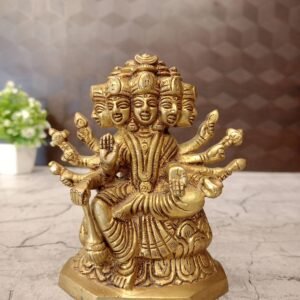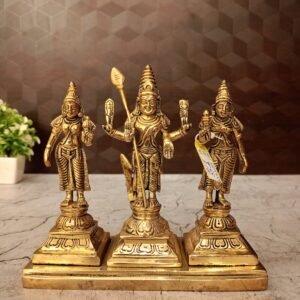
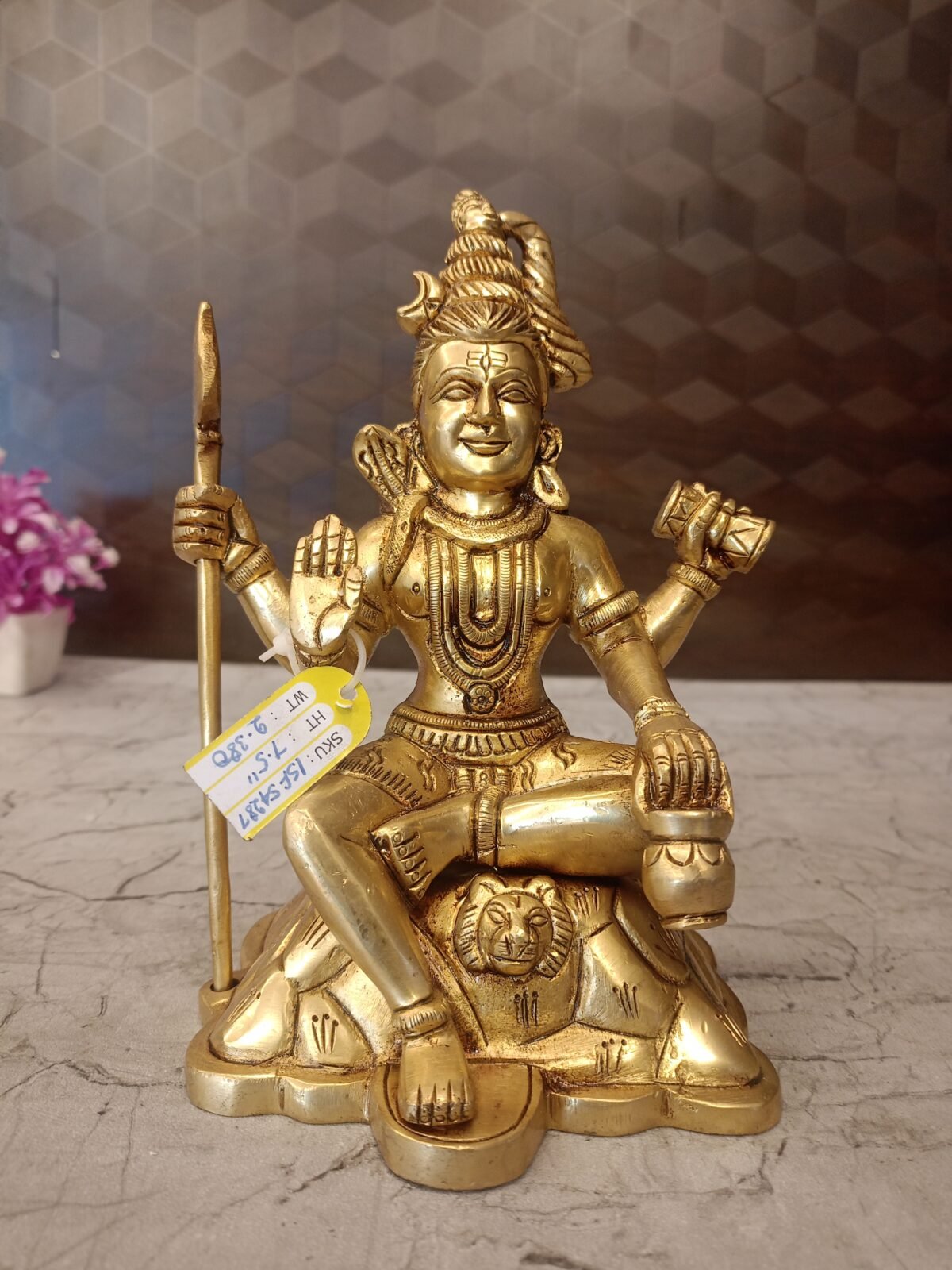
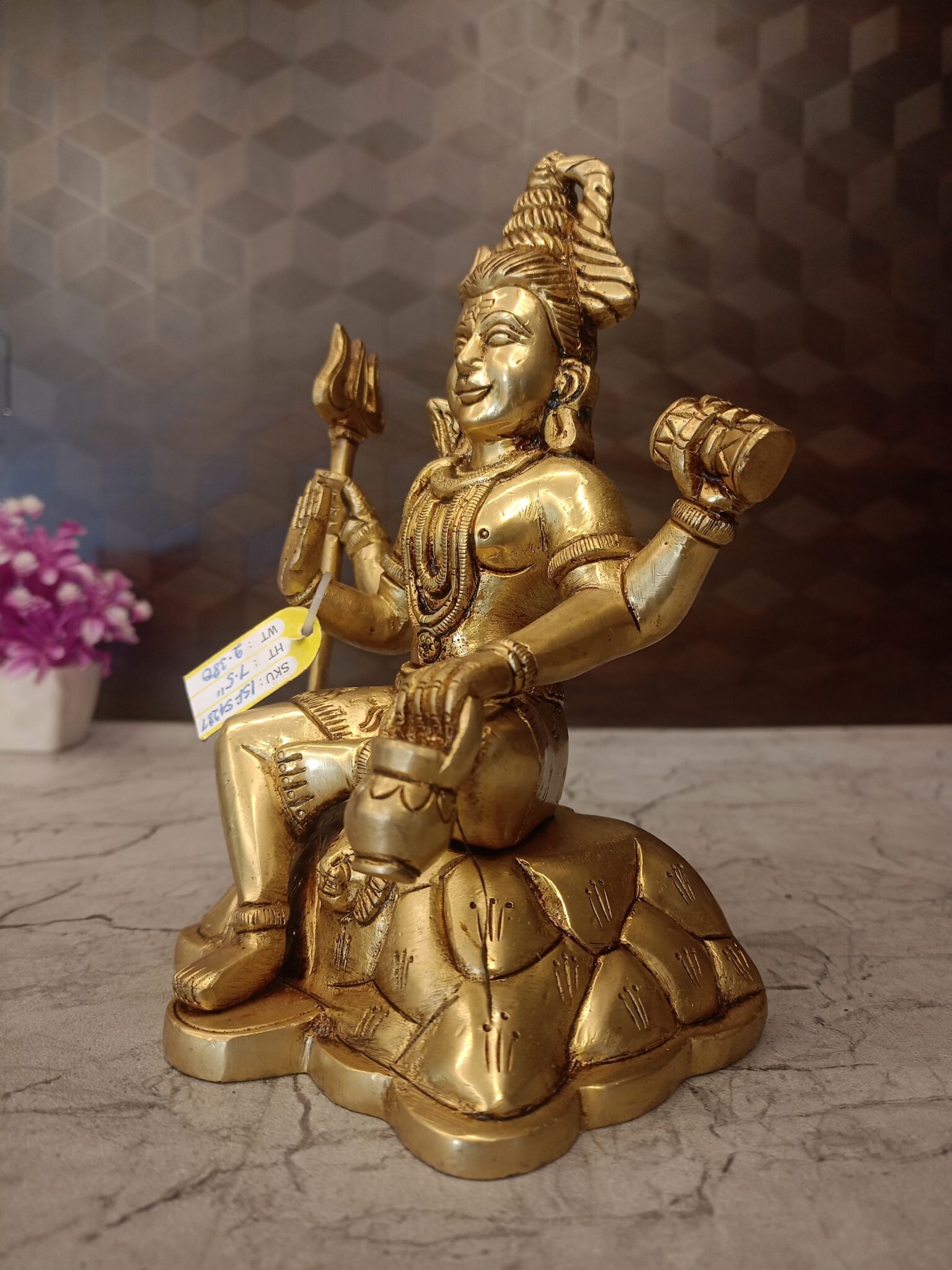
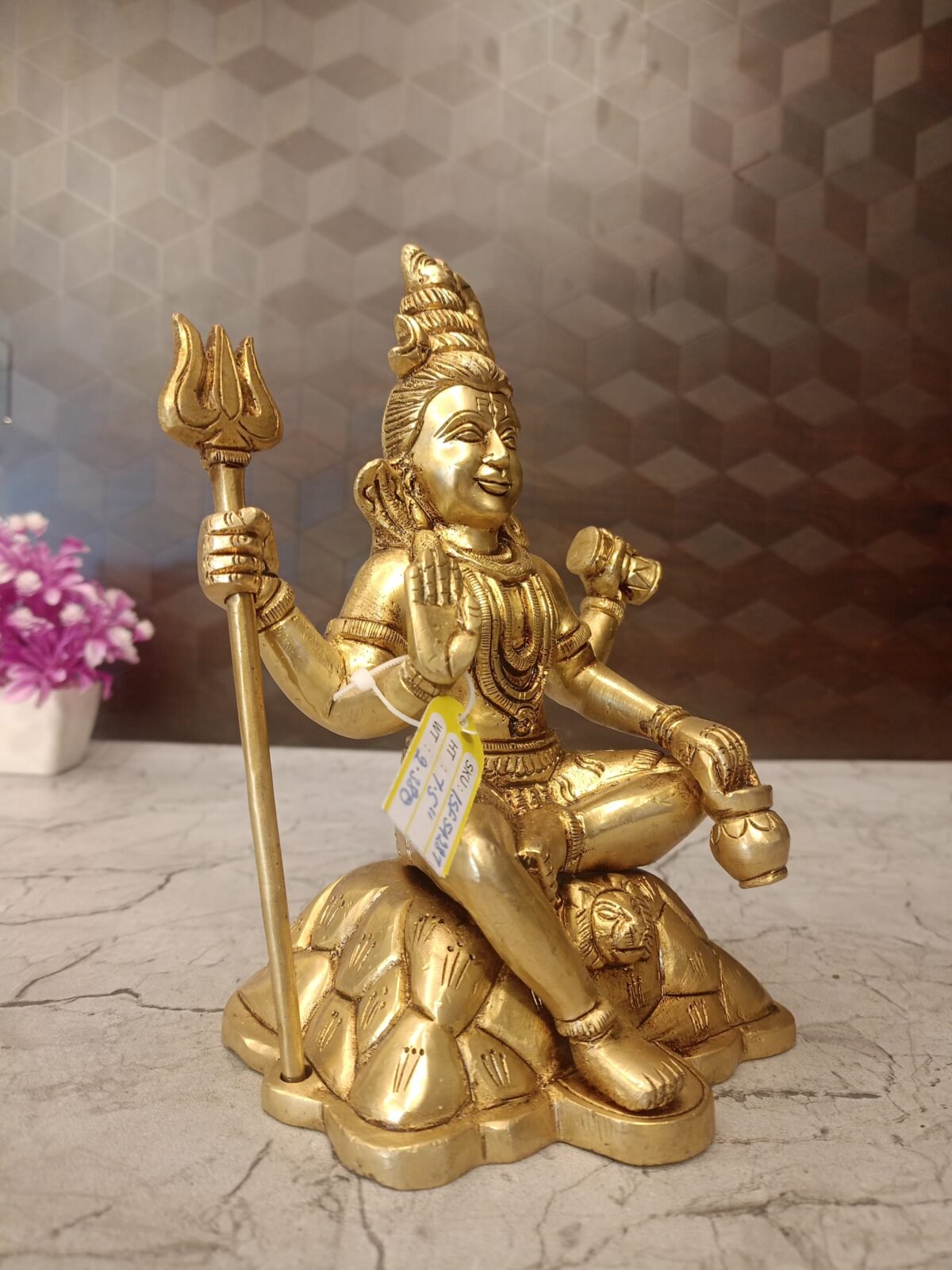
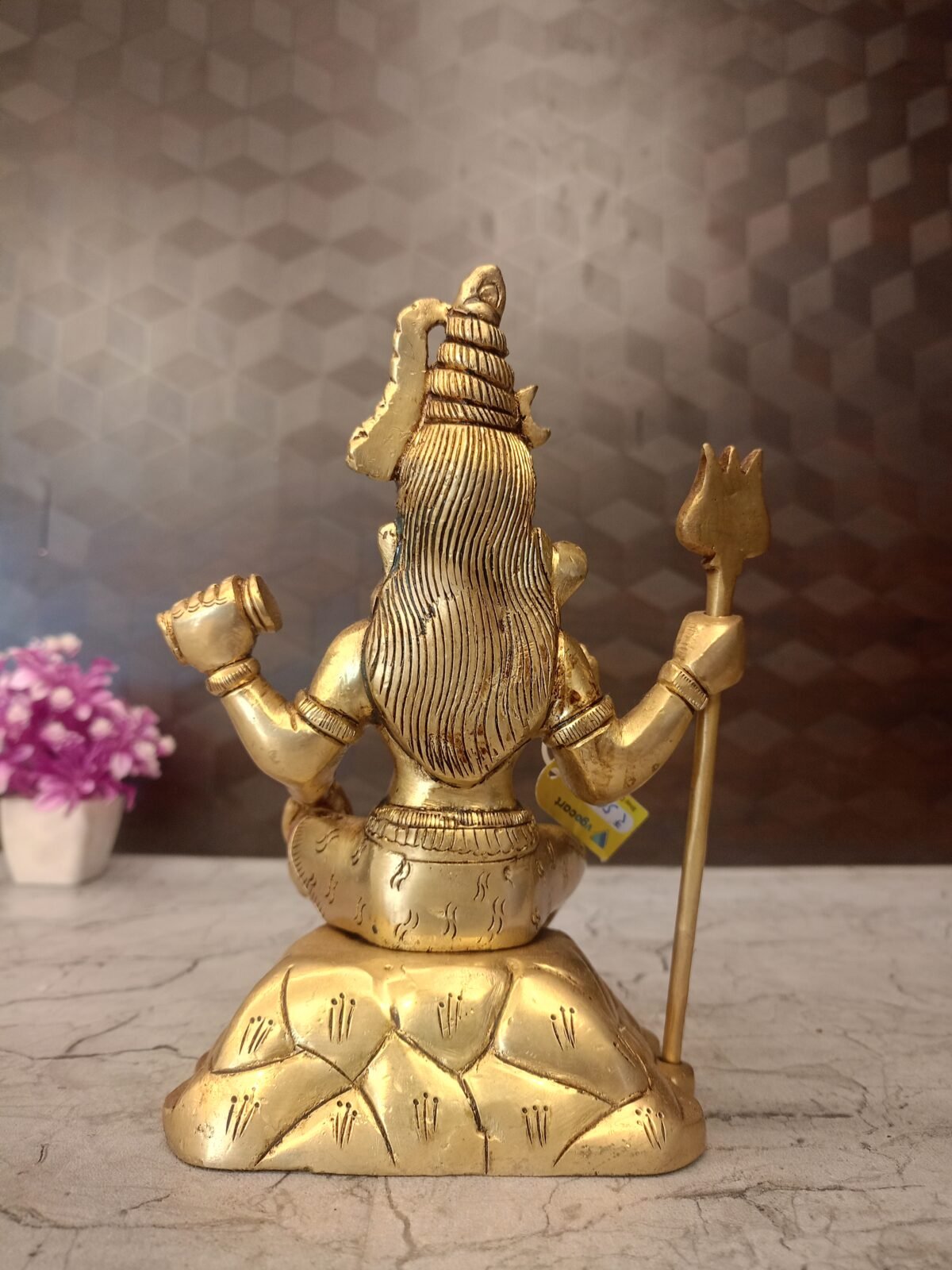
Brass Shiva Idol
Usage and Placement
- Worship: A brass Shiva idol, especially a Shiva Lingam, is a focal point for daily rituals and prayers. This can include:
-
- Abhishekam: Pouring water, milk, or other sacred liquids over the idol while chanting “Om Namah Shivaya.”
- Offerings: Presenting flowers, bael leaves, sandalwood paste, sacred ash (vibhuti), and food.
- Meditation: The idol serves as a tool for meditation and concentration, helping to create a peaceful and spiritual atmosphere.
- Vastu Shastra: According to Vastu, the ancient Indian science of architecture, the placement of a Shiva idol is crucial for maximizing positive energy:
- Direction: The most auspicious direction is the north, as it is believed to be the direction of Mount Kailash, Lord Shiva’s divine abode. The northeast corner (Ishanya) is also highly favorable.
- Elevation: Always place the idol on a raised platform or pedestal, never directly on the floor.
- Cleanliness: The area around the idol should be kept clean, uncluttered, and well-lit.
- Avoid certain areas: It is generally advised not to place the idol in bedrooms, bathrooms, or kitchens.
Benefits of a Brass Shiva Idol
- Spiritual Growth and Inner Peace: Lord Shiva is known as the supreme yogi and the destroyer of ego and negativity. His presence is believed to promote inner peace, reduce stress and anxiety, and inspire spiritual awakening.
- Dispels Negative Energy: The energy of a Shiva idol is thought to protect the home from negative influences and evil forces. Brass, being a sacred alloy, is believed to amplify divine vibrations.
- Promotes Harmony: An idol depicting the Shiv Parivar (Shiva, Parvati, Ganesha, and Kartikeya) symbolizes family unity and love, fostering harmony and understanding within the household.
- Symbol of Strength and Resilience: Lord Shiva is also known as Mahadev, the “God of Gods.” His presence serves as a reminder to be resilient and courageous during challenging times.